

Hermann Max Pechstein
Zwickau
1881 -
Berlin
1955
Max Pechstein's artistic talent was discovered and encouraged at a very early age. His conventional career, first as an apprentice with a Zwickau painting master, then at the Dresden Kunstgewerbeschule and finally at the Dresden Akademie under the decorative painter Otto Gußmann, provided Pechstein with a sound craftsmanship.
His ceiling painting at the Dresden Arts and Crafts Exhibition in 1906, with such an unconventional colour scheme that the organisers had it sprayed with grey paint to soften the colours, attracted Erich Heckel's attention. He then invited Pechstein to join the artist group "Die Brücke" which had been founded the year before in opposition to Impressionism.
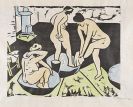
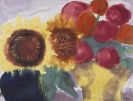
The group's aim was to "attract all revolutionary and restless forces" (Schmidt-Rottluff) and an emphasis of the power of colour in painting. In this environment Max Pechstein's Expressionist style developed further, concentrating on elaborating the focal point of the painting with a sparse painting technique. Pechstein moved to Berlin in 1908 and became a co-founder of the "Neue Sezession". He painted figures, still lifes and landscapes in a moderately Expressionist style. Perhaps it was this, which lead to the artist's early and continuing success.
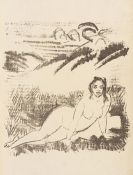
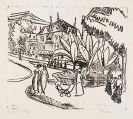
From 1945 Max Pechstein taught at the Berlin Akademie der Künste. Before that time, during the Third Reich, he was slandered as a "degenerate" artist. Apart from paintings his oeuvre includes more than 850 woodcuts, lithographs and engravings.


Would you like to sell a work by Hermann Max Pechstein?
Infos for seller


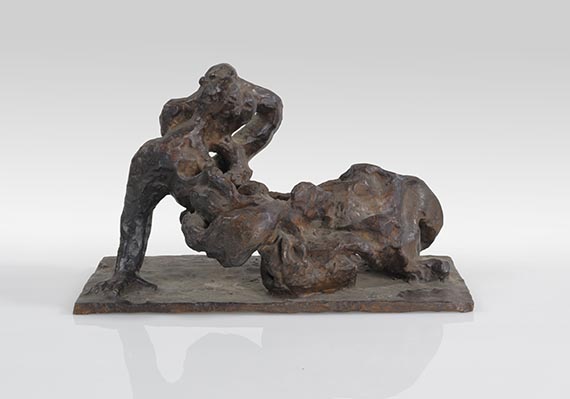
Starting bid: 4,500 EUR